Quick answer
The best editable planner template is the smallest system that already matches your real planning rhythm, output format and license needs. Choose the pages you will use first; style and bonus pages come after fit. The guide below shows how to make that decision, implement it and review whether it is actually helping.

What a useful result looks like
The search for canva planner templates often produces rules, oversized checklists and polished examples before it explains the decision. A useful result is different: it reduces uncertainty, records only information that will be reviewed and makes the next action obvious. It should also survive an ordinary interruption without requiring a complete reset.
This guide uses an original practical asset—Interactive choice matrix by use case format size and license—because a worked decision is more useful than another list of features. Use the examples as a test method, then adjust the details to your situation rather than copying them blindly.

The five decisions to make first
Use case
Use case. personal planning, client work, resale preparation or team coordination. Start here because this boundary changes the pages, tools and routine that follow. Write down the evidence you used; if the situation changes, you will know which decision to revisit. In a canva planner templates workflow, the test is observable: this choice should make the next decision faster, clearer or more reliable.
Editing depth
Editing depth. text-only changes, brand styling or complete layout changes. Treat this as a real constraint, not an ideal-world preference. Compare an ordinary week with a demanding one and choose an approach that remains usable in both. In a canva planner templates workflow, the test is observable: this choice should make the next decision faster, clearer or more reliable.

Output
Output. print, fillable PDF, tablet annotation or a mix. This is where an attractive layout either earns its place or creates maintenance. Keep it only when it removes a repeated question, missed handoff or avoidable search. In a canva planner templates workflow, the test is observable: this choice should make the next decision faster, clearer or more reliable.
Page size
Page size. match the binder, printer and handwriting space you actually use. Use evidence from recent behaviour rather than the version of the week you hope to have. A small honest system is more reliable than a complete-looking one that is not reviewed. In a canva planner templates workflow, the test is observable: this choice should make the next decision faster, clearer or more reliable.
License
License. separate permission to edit from permission to distribute or sell. Record the answer beside the plan so later choices cannot quietly contradict it. If the answer is uncertain, test the lightest version for one cycle before expanding it. In a canva planner templates workflow, the test is observable: this choice should make the next decision faster, clearer or more reliable.
Build the system step by step
Build the first canva planner templates version in sequence, beginning with write down the decisions the planner must help you make. Later reviews can be shorter because confirmed constraints remain in place. This order separates facts, choices and execution so a new idea cannot silently overwrite an important commitment.
Step 1: Write down the decisions the planner must help you make
Write down the decisions the planner must help you make. Capture the result in one visible place and name who owns the next action. A useful output is specific enough that another person can tell what happens next without reconstructing the discussion. That is how canva planner templates becomes an operating system rather than a collection of boxes to fill.
Step 2: Choose weekly, daily and reference pages from those decisions
Choose weekly, daily and reference pages from those decisions. Use one real example instead of filling the page with hypothetical detail. The example will expose missing fields, unclear labels and assumptions much faster than decorating an empty master. That is how canva planner templates becomes an operating system rather than a collection of boxes to fill.

Step 3: Pick one primary output format before evaluating decoration
Pick one primary output format before evaluating decoration. Check the choice against available time, money, tools and people before moving on. Record the limiting factor so a later review can distinguish a changed constraint from an abandoned goal. That is how canva planner templates becomes an operating system rather than a collection of boxes to fill.
Step 4: Confirm dimensions, bleed, margins and printer behavior
Confirm dimensions, bleed, margins and printer behavior. Leave a deliberate buffer: a practical plan absorbs ordinary change. Decide in advance what may move, what must remain fixed and who needs to know when the plan changes. That is how canva planner templates becomes an operating system rather than a collection of boxes to fill.

Step 5: Read both the template seller’s terms and Canva content terms
Read both the template seller’s terms and Canva content terms. Define what “complete enough” means so the step cannot expand forever. Stop when the next action is safe and clear; extra detail can wait until it proves useful. That is how canva planner templates becomes an operating system rather than a collection of boxes to fill.
Step 6: Test one representative page before committing to the full system
Test one representative page before committing to the full system. Close the loop at review time: keep confirmed facts, correct assumptions and remove work that no longer earns a place. Carrying an item forward should be a fresh decision, not a default. That is how canva planner templates becomes an operating system rather than a collection of boxes to fill.
A worked example
A freelance designer needs weekly priorities, project milestones and invoice follow-up. A 150-page life planner looks generous but adds search time. A focused editable kit with a weekly spread, project page and finance checkpoint is the better fit; decorative pages can be added only after the workflow works.
Notice what this canva planner templates example leaves out: it does not copy every possible field or schedule every available minute. It records use case and the other governing constraints, chooses a small set of useful outputs and preserves a deliberate way to adapt. That is the difference between a reference page and a working plan.

The original decision matrix
Use this matrix when evaluating canva planner templates. Score each row as clear, uncertain or high friction. A high-friction answer is a reason to simplify or test; it is not a reason to buy more pages.
| Decision | Evidence to inspect | Keep when… | Simplify when… |
|---|---|---|---|
| Use case | personal planning, client work, resale preparation or team coordination | It removes a repeated decision | It adds upkeep without changing action |
| Editing depth | text-only changes, brand styling or complete layout changes | It removes a repeated decision | It adds upkeep without changing action |
| Output | print, fillable PDF, tablet annotation or a mix | It removes a repeated decision | It adds upkeep without changing action |
| Page size | match the binder, printer and handwriting space you actually use | It removes a repeated decision | It adds upkeep without changing action |
| License | separate permission to edit from permission to distribute or sell | It removes a repeated decision | It adds upkeep without changing action |

Common mistakes and how to correct them
Buying by colour while ignoring page function
It front-loads visible activity before the governing facts are clear. In this canva planner templates workflow, correct it by choosing to choose weekly, daily and reference pages from those decisions. Test that correction for one real review cycle, observe the friction and change only the field or step responsible.
Assuming editable automatically means resellable
It treats an assumption as though it were a confirmed constraint. In this canva planner templates workflow, correct it by choosing to pick one primary output format before evaluating decoration. Test that correction for one real review cycle, observe the friction and change only the field or step responsible.

Choosing a size before checking the printer and binder
It adds upkeep but does not improve the next decision. In this canva planner templates workflow, correct it by choosing to confirm dimensions, bleed, margins and printer behavior. Test that correction for one real review cycle, observe the friction and change only the field or step responsible.
Importing every bonus page into the working planner
It hides the moment when the plan needs to be reviewed or renegotiated. In this canva planner templates workflow, correct it by choosing to read both the template seller’s terms and Canva content terms. Test that correction for one real review cycle, observe the friction and change only the field or step responsible.
Practical implementation checklist
Use this canva planner templates checklist as a final preflight. Mark an item complete only when the decision, owner or evidence exists—not because the page has a box for it.
-
List three recurring decisions.
-
Choose the primary format.
-
Measure the physical setup.
-
Check free versus Pro Canva elements.
-
Read the seller license.
-
Open and edit a sample page.
-
Print or export one test.
-
Keep a clean master copy.
After one full canva planner templates cycle, review what you never looked at, what arrived too late and what still required a second system. Remove unused fields, move essential information closer to the decision and preserve a clean master before making structural edits.
Key facts
- Core decision
- The best editable planner template is the smallest system that already matches your real planning rhythm, output format and license needs. Choose the pages you will use first; style and bonus pages come after fit. Source
- Original resource
- Interactive choice matrix by use case format size and license
- Product imagery
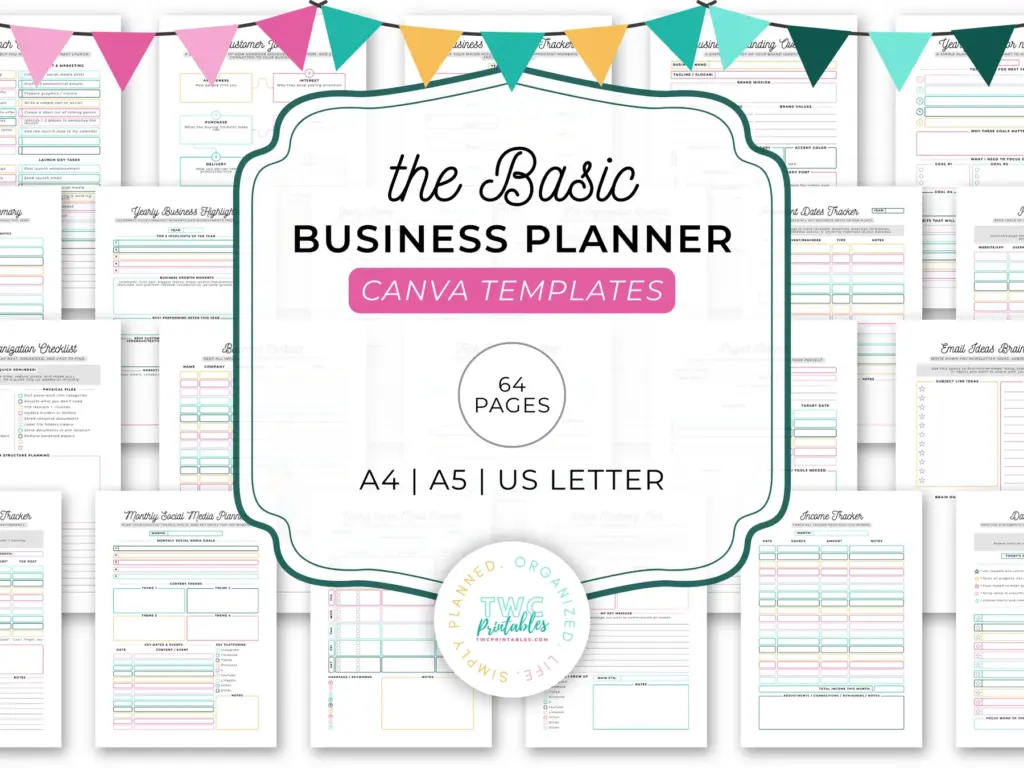
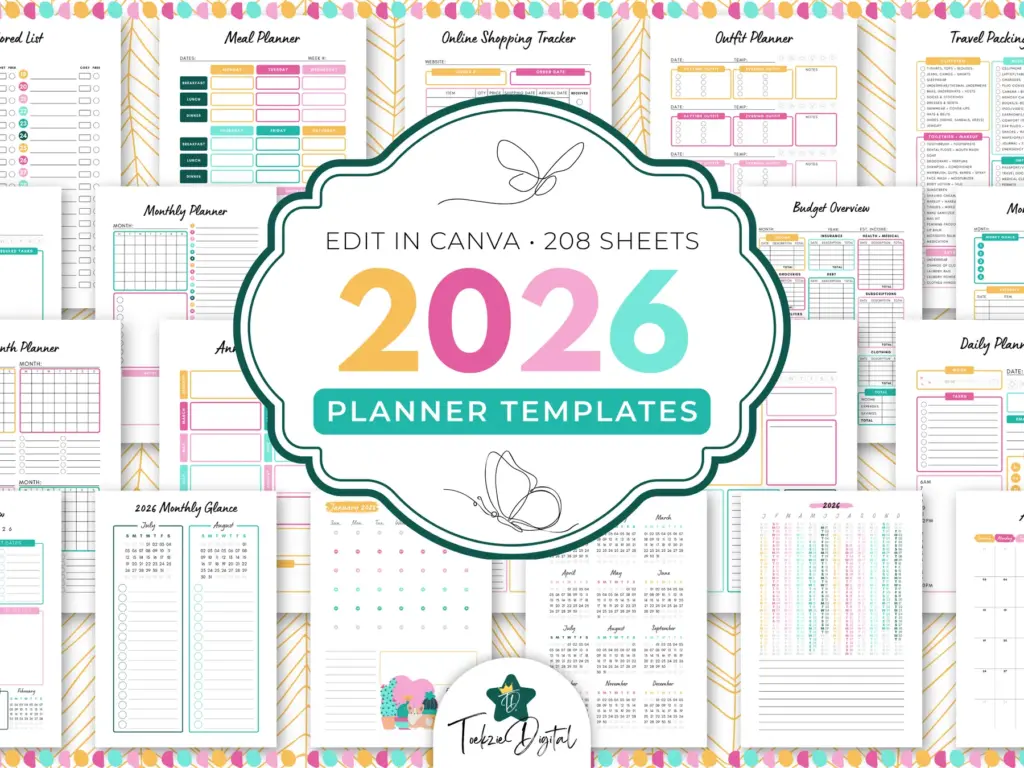
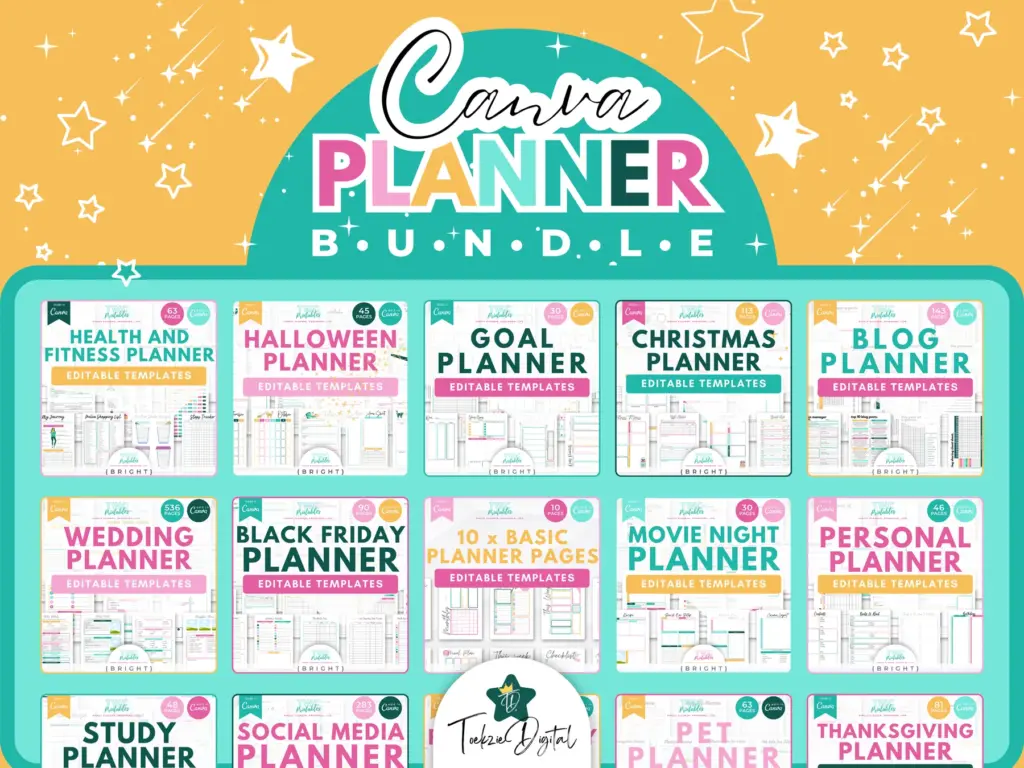
- Existing TWC products use real first-party media; editorial scenes are labelled as illustrations. Source
Frequently asked questions
What is the best first step for canva planner templates?
The best editable planner template is the smallest system that already matches your real planning rhythm, output format and license needs. Choose the pages you will use first; style and bonus pages come after fit.
How often should I review or update this system?
Review often enough to catch changes before they become expensive. A short weekly review works for most active plans, with an additional review at major deadlines or when the underlying constraints change.
Can an editable Canva template make this easier?
Yes. An editable template can remove layout work, but it cannot choose priorities for you. Confirm the page function, output size, Canva asset requirements and seller license before relying on it.
What should I do when the plan changes?
Return to the next useful decision instead of rebuilding everything. Keep confirmed commitments, remove expired items, choose the smallest next action and update only the part of the plan that changed.
Sources and review note
The visible source list records the references reviewed for this canva planner templates guide on 2026-08-25. Platform interfaces, prices, policies and legal requirements can change; confirm current official terms or local requirements whenever a choice has legal, financial, health or account consequences.
Sources
- Free printable and customizable planner templates — Canva (accessed )
- Relevant TWCprintables template collection — TWCprintables (accessed )
Your next useful step
If this canva planner templates workflow fits, review the matching TWCprintables template collection and compare its real pages, editing format and license with the checklist above. Choose for fit rather than the largest page count.
Reviewed and updated by TWCprintables Editorial Team.