The goal is not to decorate every inch. It is to make the right information feel effortless to notice and act on.
A weekly social media workflow begins with one audience problem and one substantial source idea, then adapts that idea to channel and buyer stage. Plan the message before the format, batch shared assets, and keep room for timely conversation.
The goal is not to decorate every inch. It is to make the right information feel effortless to notice and act on. A weekly social media workflow begins with one audience problem and one substantial source idea, then adapts that idea to channel and buyer stage. Plan the message before the format, batch shared assets, and keep room for timely conversation.
Work through these in order the first time. Once the system is familiar, your regular review can be wonderfully short.
Begin here before you add anything optional. A clear starting point saves a surprising amount of rework later.
Keep this information together in one place. When the facts are easy to find, the next decision becomes much simpler.
Now shape the plan around what is actually available—your real time, tools, budget and capacity.
This is where the plan becomes flexible. Leave enough breathing room for the ordinary changes real life brings.
Do a practical check before moving on. Make sure the people, dates, quantities and access details still line up.
Finish with a simple review rule: keep what helps, remove what does not, and update only the part that changed.
A planner-size guide becomes a short comparison Reel, a portrait carousel, a Pinterest reference graphic and an email tip. Each format answers the same decision at a different depth. The shop link appears only where the viewer has enough context to evaluate the product.
Notice the pattern: the plan holds the useful details, but it still leaves room for a human day. That is the sweet spot.
Pause and return to the first decision. Clarity now is far more useful than extra detail built on the wrong assumption. Try this instead: Write the core point, proof and useful action.
Bring this back to one trusted source of truth so you are not maintaining the same information in several places. Try this instead: Map it to awareness, consideration and conversion moments.
Test the smallest workable version first. You can add more once the page has earned a place in the routine. Try this instead: Adapt the message for each selected channel.
Add a reset point. A useful system should help you continue after a change, not make you feel as though you have failed it. Try this instead: Batch visuals, captions and approvals.
Use this as a cheerful final check—not another list you have to manage perfectly. If the important details are covered, you are ready to begin.
A weekly social media workflow begins with one audience problem and one substantial source idea, then adapts that idea to channel and buyer stage. Plan the message before the format, batch shared assets, and keep room for timely conversation.
Start with audience, source idea and channel role. Those choices shape the pages, level of detail and routine that will actually be useful.
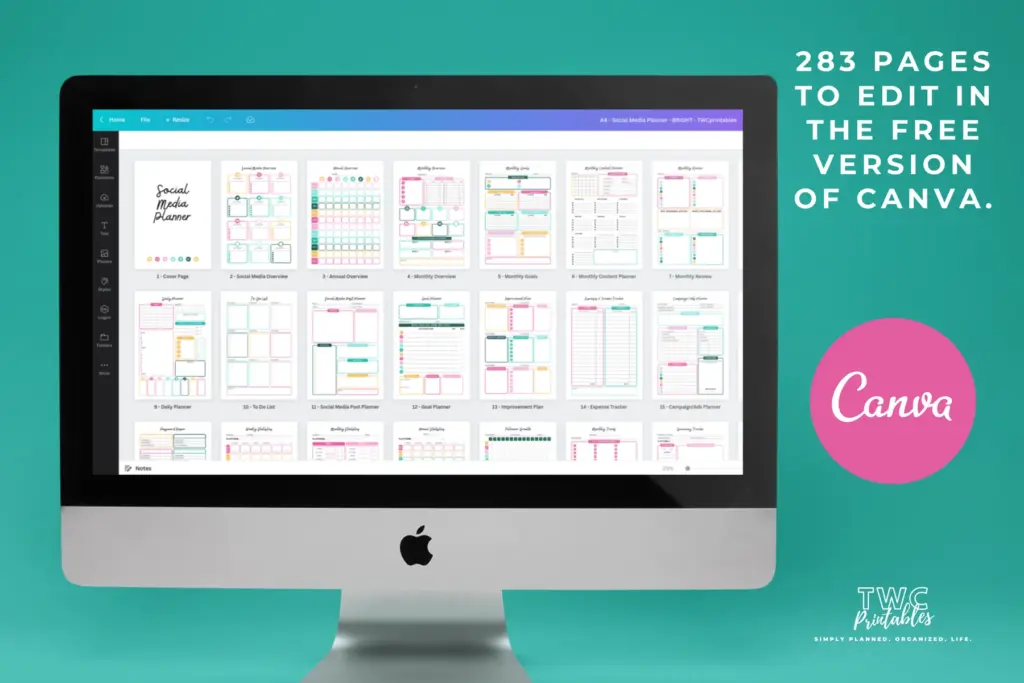
Yes. An editable Canva template can remove the layout work and give every important detail a clear home. Start with the pages you will genuinely use, customize the colours, fonts and wording, and leave optional pages out until they prove helpful.
Begin with choose one weekly theme from customer evidence, write the core point, proof and useful action and map it to awareness, consideration and conversion moments. Use the smallest complete version for one real cycle, then keep what helps and simplify what does not.
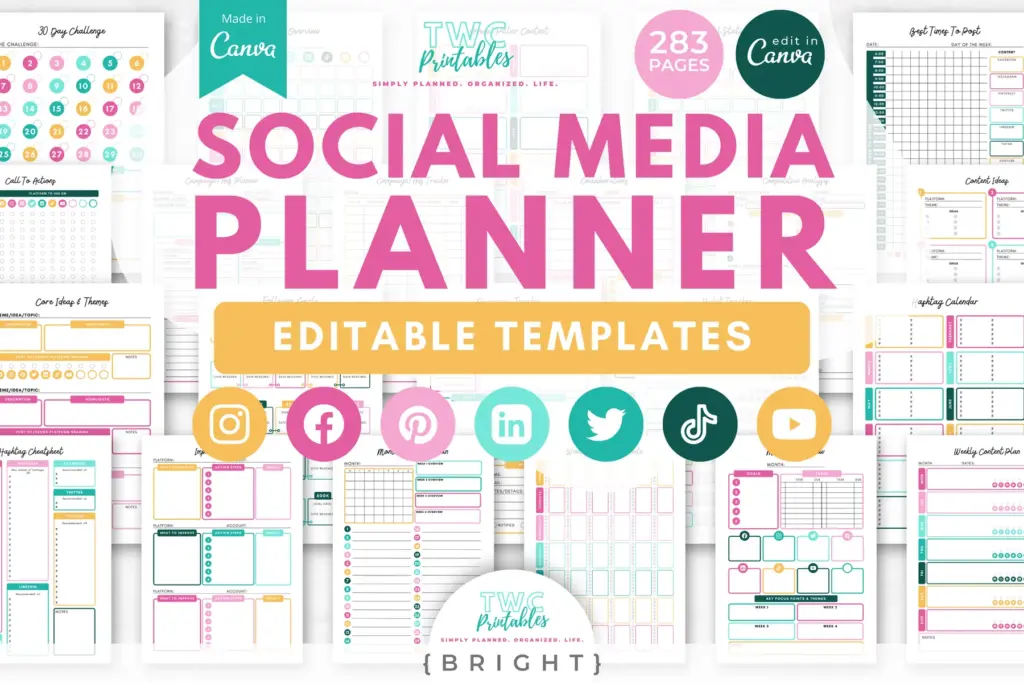
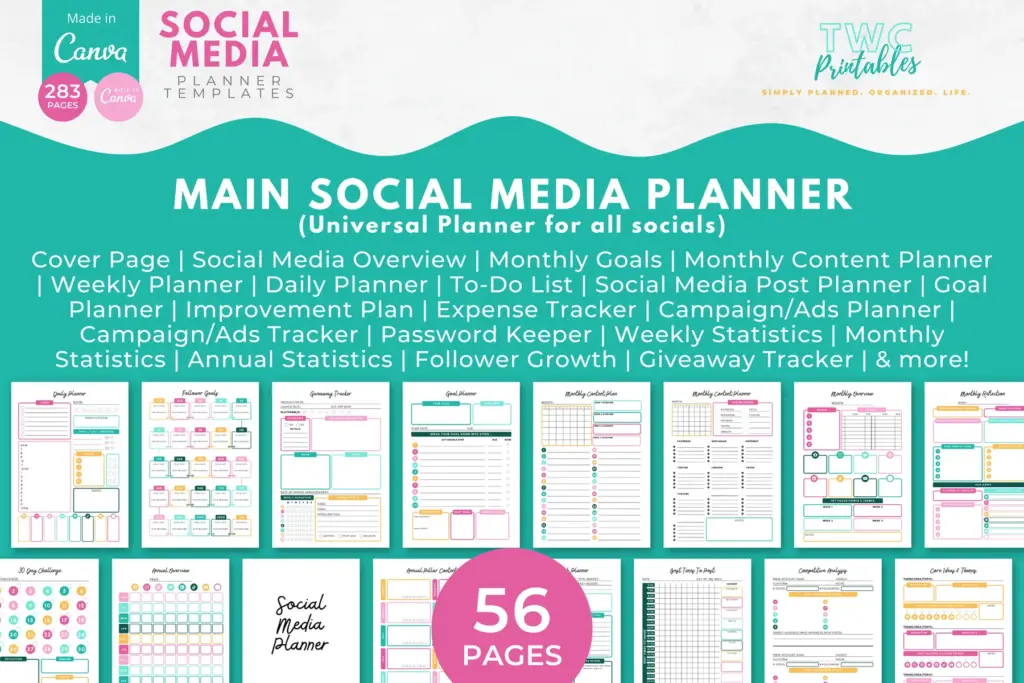
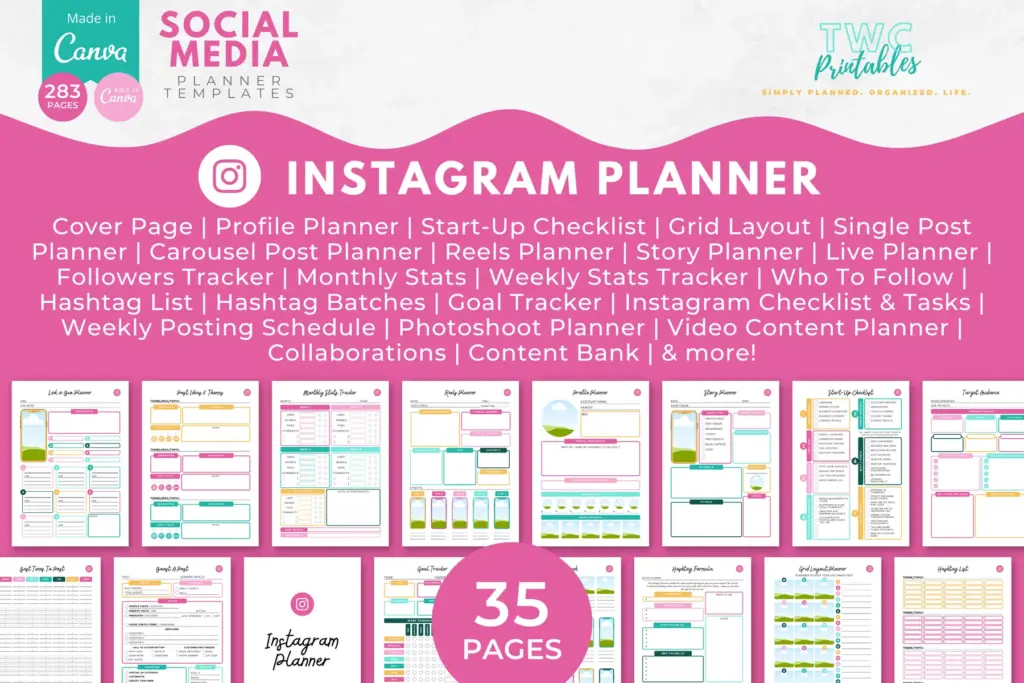
Plan the message, format and follow-through in one place with editable social-media pages built for a practical content routine.
The sources below were reviewed for this guide on 26 August 2026. Platform features, prices, policies and legal requirements can change, so confirm the current official terms whenever a decision has legal, financial, health or account consequences.
Reviewed and updated by TWCprintables Editorial Team.